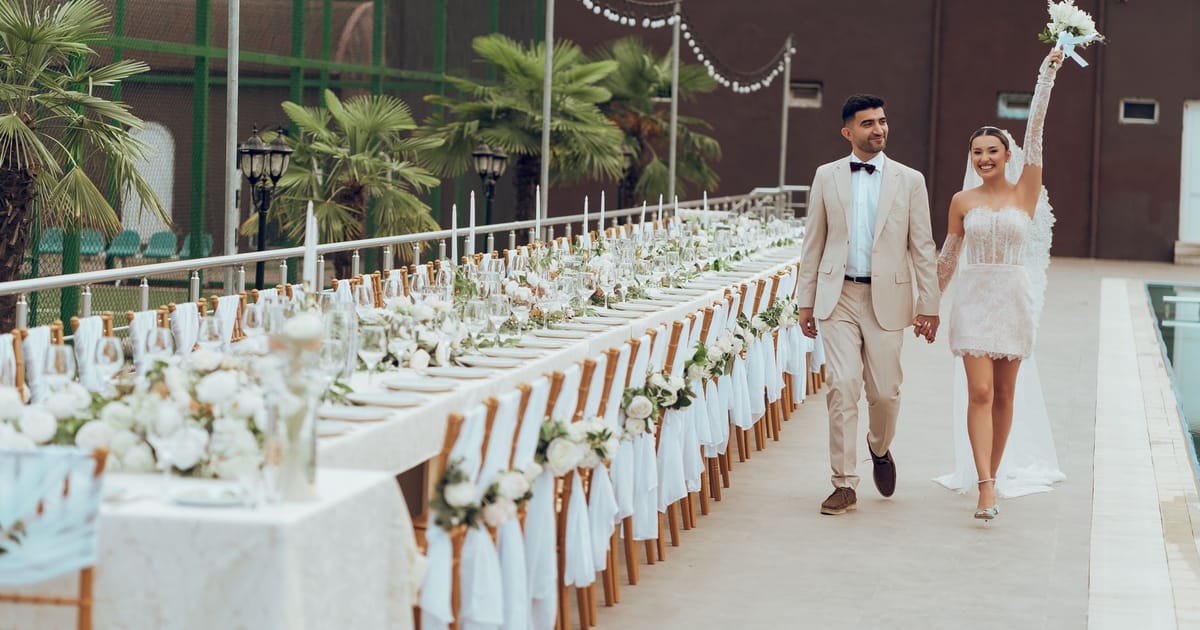
Wedding venue rental in the United States typically runs $3,000 to $11,000 for the site fee alone, according to The Knot Real Weddings Study -- but that range compresses the real story. What you pay depends heavily on region, day of week, guest count, and how much infrastructure the venue provides. Understanding each of those variables before you tour a single property will save you from sticker shock and wasted site visits.
What the Numbers Actually Show
The Knot's annual Real Weddings Study consistently reports venue as one of the top two or three largest line items in a wedding budget, often accounting for 25 to 35 percent of total spend. For 2025 weddings surveyed, the national average total wedding cost landed between $30,000 and $35,000, which puts the venue share at roughly $7,500 to $12,000 when you include ceremony space, reception space, and any mandatory catering minimums the venue attaches.
That sentence contains a phrase worth unpacking: mandatory catering minimum. Many venues -- especially hotel ballrooms, country clubs, and dedicated event spaces -- do not quote you a flat rental fee. They quote a food-and-beverage minimum, typically $80 to $200 per person, with the room use bundled in. If you bring 120 guests and the minimum is $120 per person, you owe at least $14,400 in catering before a single upgrade. The room is not free. It is just hidden inside the per-head number.
Other venues operate on a true site-fee model: you pay a flat fee for access to the property, and you hire your own caterer separately. Knowing which model you are looking at is the first question to ask on any venue inquiry.
See Average Wedding Cost by State (2026) for a breakdown of how venue costs shift when you cross state lines -- the difference between New York and Nebraska is often three to four times the national average.
Venue Type vs. Typical Rental Cost: A Comparison
The table below shows rental fee ranges by venue category. These are site-fee ranges only and do not include catering, furniture rental, or staffing unless noted. Ranges are drawn from WeddingWire Newlywed Report data and regional market surveys.
| Venue Type | Typical Site-Fee Range | What Is Usually Included | What You Typically Add |
|---|---|---|---|
| Hotel ballroom | $2,000 -- $15,000+ | Tables, chairs, catering kitchen, AV infrastructure | Catering (often via mandatory minimum), linens, decor |
| Country club | $3,000 -- $12,000 | Tables, chairs, on-site kitchen, parking | Catering (in-house required at most clubs), florals |
| Barn / farm | $2,500 -- $8,000 | Structural space, basic lighting, parking | Tables, chairs, linens, catering equipment, restrooms |
| Industrial loft | $1,500 -- $7,000 | Raw space, basic lighting | Everything: furniture, catering, decor, restrooms |
| Historic estate | $4,000 -- $18,000 | Grounds, ceremony + reception areas, some furniture | Preferred vendor catering, florals, tent if outdoor |
| Botanical garden | $3,000 -- $10,000 | Garden grounds, indoor backup space | Catering, furniture, permit compliance |
| Outdoor public park | $200 -- $1,500 | Land access, basic pavilion if available | All infrastructure: tent, furniture, catering, restrooms |
| Restaurant buyout | $1,000 -- $5,000 | Tables, chairs, kitchen, staff | Decor customization, ceremony space (usually off-site) |
| Community / rec center | $300 -- $2,000 | Tables, chairs, kitchen access | Decor, catering, linens |
One pattern stands out across every category: the lower the site fee, the higher the logistics overhead. A $500 park permit sounds like a win until you are renting a 40-foot tent, 15 round tables, 120 chairs, a generator, and portable restrooms -- all of which can push total infrastructure costs past $8,000 on their own.
Tip
Before comparing venue quotes, standardize what each number actually covers. Ask every venue: "What is included in this fee?" and "What are the required add-ons?" A $5,000 ballroom quote with mandatory catering may cost $18,000 all-in. A $4,000 barn quote with a-la-carte catering may land at $13,000. You cannot compare the headline numbers until you know what is behind them.
The Factors That Push Venue Cost Up or Down
Several variables move venue pricing more than couples typically expect.
Geographic market. This is the single largest driver of venue cost variation. The WeddingWire Newlywed Report consistently shows that couples in the New York, San Francisco, and Washington D.C. metro areas spend two to four times what couples in the Midwest and South spend on the same type of venue. A hotel ballroom that costs $4,000 in Kansas City may run $14,000 in Manhattan. If you are flexible about location -- even 30 to 45 minutes from the city center -- you can often find the same type of venue at 30 to 50 percent less.
Day of the week. Saturday is the most expensive day to hold a reception at almost every venue in the country, because demand is highest. Friday evenings and Sundays typically carry a 20 to 40 percent discount, according to WeddingWire data. The tradeoff is guest convenience: some attendees, especially those traveling, will have more difficulty making a Friday evening or Sunday afternoon work. That is a real tradeoff to weigh, not a trivial one.
Time of year. Peak wedding season runs roughly May through October in most of the United States, with June, September, and October commanding the highest demand. January, February, and March are consistently the slowest months for venues, and many will negotiate meaningfully on price for those dates. If a specific look or season matters deeply to you, price that preference. If not, an off-season date can unlock real budget flexibility.
Guest count and minimum spends. Many venues have a capacity-based pricing structure. A space that holds 200 guests typically costs more than one holding 80 -- but more importantly, catering minimums and staffing costs scale with attendance. Every additional 25 guests is not just a seat; it is additional catering cost, additional place settings, potentially an additional server. Keeping your guest list tight is the most reliable way to control venue-related costs.
Venue age and infrastructure. Newly renovated or purpose-built event spaces typically carry higher rental fees because they have invested in built-in lighting systems, AV infrastructure, dedicated prep kitchens, and climate control. Older properties with character -- historic barns, repurposed industrial spaces -- may offer lower site fees but require you to import more infrastructure. Neither is categorically better. The question is which infrastructure you actually need.
See How to Build a Wedding Budget (Step-by-Step) before finalizing any venue commitment. Signing a venue contract without a complete budget puts you in a position where the remaining vendors -- photographer, catering, florals, music -- must fit into whatever is left. That math rarely works in your favor.
Warning
Venue deposits are typically 25 to 50 percent of the total contracted amount, due at signing, and are almost always non-refundable. Read the cancellation and force-majeure clauses before you write that check. Ask specifically: what happens if the venue becomes unavailable due to circumstances outside your control? If the answer is unsatisfying, negotiate or walk away.
Hidden and Often-Overlooked Venue Costs
The line items below rarely appear in the initial venue quote. They routinely appear on the final invoice.
Service charges and administrative fees. Hotel and country-club venues commonly add a service charge of 18 to 25 percent on top of all food and beverage. On a $14,000 catering minimum, a 22 percent service charge adds over $3,000. Ask whether the service charge is in addition to or inclusive of gratuity.
Venue coordinator vs. day-of coordinator. Many venues include a venue coordinator in the rental fee. That person manages the venue's interests -- setup logistics, vendor access, building operations. They are not your wedding planner. If you need someone managing your timeline, cuing your vendors, and making decisions on your behalf, you need to hire that person separately. Couples regularly discover this distinction six months before the wedding.
Outside vendor fees. Some venues charge a fee -- sometimes called a corkage fee, a kitchen access fee, or an outside vendor fee -- when you bring a caterer or bar service that is not on their preferred list. These fees range from a few hundred dollars to $1,500 or more. If vendor choice matters to you, ask about outside vendor policies before you book.
Parking and transportation. Venues with limited on-site parking frequently expect you to arrange and pay for shuttle service or a valet program. In urban venues, parking validation for guests can add $15 to $25 per car. Estimate your attendee vehicle count and ask the venue how parking is typically handled before assuming it is covered.
Setup and breakdown windows. Some venues price their rental window tightly -- five or six hours for the event, with setup and breakdown squeezed into that window or charged as overtime. Ask exactly when vendor access begins, when the event must end, and what the cost is for additional hours. An hour of overtime at a busy venue can run $500 to $1,500.
Weather contingency at outdoor venues. If you are booking an outdoor or semi-outdoor venue, ask directly: what is the rain plan, and who pays for it? Some venues have a covered backup structure. Many do not. A last-minute tent rental in response to a forecast is significantly more expensive than a tent booked months in advance.
Key takeaway
The venue contract you sign is a legal document. Before you sign, have someone read it fully -- not skim it. Know your deposit amount and whether it is refundable under any circumstance. Know the overtime rate. Know what "included" actually means. A 30-minute read now is worth more than a painful conversation with the venue manager three weeks before your wedding.
Strategies for Managing Venue Cost
Venue cost is one of the more negotiable elements of a wedding budget, particularly if you are flexible on date and have a realistic timeline. Several approaches consistently help couples control what they spend.
Book an off-peak date. Friday evenings, Sunday afternoons, and winter months (November through March outside of holiday weekends) represent the clearest opportunity for venue savings. The WeddingWire Newlywed Report has found that couples choosing off-peak dates save an average of 20 to 30 percent on venue costs compared to Saturday peak-season events at comparable venues. That figure varies by market, but the directional pattern is consistent across geographies.
Negotiate the included hours. Venues set their standard rental window, but they often have flexibility -- especially if your date is one they would otherwise struggle to fill. Ask for an earlier vendor access time or a later breakdown cutoff. If they say no, ask what it would cost to add those hours. Having the number in writing before you sign prevents surprises.
Separate ceremony and reception venues. A dedicated ceremony space at your reception venue is often priced as a premium add-on, particularly at hotels and country clubs, where a ceremony fee of $1,500 to $4,000 is common. Holding the ceremony at a house of worship or a public park -- which may charge only a modest permit fee -- and then moving to the reception venue can eliminate that charge entirely. Factor in transportation logistics, but the math often works in your favor.
Compare all-in costs, not headline fees. As noted above, venues with low site fees often require you to bring more infrastructure, while venues with higher fees often bundle more. Build out the full estimated cost for each finalist venue -- site fee, catering, furniture rental, staffing, taxes, and service charges -- before comparing them. The venue with the highest advertised fee sometimes wins the all-in comparison.
Ask about minimum guest-count flexibility. If you are planning a smaller wedding -- under 80 guests -- some venues will negotiate their catering minimums downward for intimate events, especially on non-Saturday dates. This is worth asking directly. The worst answer you will get is no.
For a detailed breakdown of how to fit venue cost into your overall spending plan, see How to Build a Wedding Budget (Step-by-Step). For a side-by-side look at venue styles beyond just cost, Barn vs. Ballroom: How to Choose Your Wedding Venue walks through the practical differences in atmosphere, logistics, and vendor requirements.
What Questions to Ask When You Tour
Knowing what to ask during a venue tour changes what information you walk away with. The right questions expose the costs and constraints that do not appear in the brochure.
A practical set of questions to bring with you is covered in depth in Questions to Ask Your Wedding Venue Before You Book, but the financial-specific ones to prioritize include:
- What is the all-in cost for our estimated guest count on our preferred date -- including service charges, taxes, and any mandatory fees?
- What is the deposit amount, when is it due, and under what conditions is it refundable?
- What is the cost for additional rental hours beyond the standard window?
- Are there restrictions on outside caterers, bartenders, or other vendors? What fees apply?
- What is included in the rental -- furniture, linens, AV, staffing?
- Is there a venue coordinator included, and what specifically does that person handle?
- What is the contingency plan for inclement weather, and who absorbs the cost of activating it?
You will not always get complete answers on the first tour. Follow up in writing and request an itemized quote that shows every mandatory and optional cost. A venue that resists providing a detailed quote in writing is telling you something important.
Putting It Together
Venue cost is rarely just the number at the top of the contract. It is the site fee plus the catering minimum plus the service charge plus the furniture rental plus the outside vendor fees plus the overtime rate. For most couples, the venue represents the largest single budget commitment they will make -- and often the first.
That sequence matters. Signing a venue contract before you have a complete budget view can leave you underfunded for every vendor that follows. Before you fall in love with a space, know your total number, understand what the venue's contract actually obligates you to spend, and confirm that the math leaves room for the rest of your wedding.
The Average Wedding Cost by State (2026) guide can help you calibrate whether the venue quotes you are seeing are in line with your market. If they are consistently higher than you expected, that is useful information -- it means your guest list, your date choice, or your venue type may need to shift before your budget can work.
Venue deposits often hit at the worst time -- right after you have told everyone you are engaged and the adrenaline has worn off. Giving yourself a full picture of the costs before that moment is the most useful thing you can do in the first weeks of planning.
Frequently asked questions
How much does a wedding venue cost on average in 2026?
According to The Knot Real Weddings Study, couples spent an average of $6,000 to $11,000 on their venue in recent years, with significant variation by region. Major metro areas routinely push that figure to $15,000 or more, while rural and mid-sized markets often land between $2,500 and $5,500.
What is typically included in a wedding venue rental fee?
Inclusions vary widely. Ballrooms and hotel venues often bundle tables, chairs, and a catering kitchen. Barn and outdoor venues commonly charge a flat site fee and require you to rent furniture and catering equipment separately. Always request a written list of inclusions before comparing quotes.
Are outdoor wedding venues cheaper than indoor ones?
Not always. Public parks and municipal outdoor spaces can cost a few hundred dollars in permit fees, but private outdoor estates frequently charge $3,000 to $8,000 or more for the site alone. Factor in tent rental ($1,500 to $5,000 depending on size), lighting, and restroom facilities before assuming outdoors saves money.
What is the cheapest type of wedding venue?
Public parks, community centers, religious facilities, and family-owned properties are consistently the lowest-cost options -- often $500 or under in site fees. The tradeoff is higher logistics burden: you typically supply or rent all furniture, catering equipment, and sometimes restrooms.
When should we book a wedding venue to get the best price?
Venues booked 12 to 18 months in advance tend to offer more date flexibility, which helps you negotiate off-peak pricing. Friday and Sunday weddings typically cost 20 to 40 percent less than Saturday events at the same venue, according to industry surveys from WeddingWire.