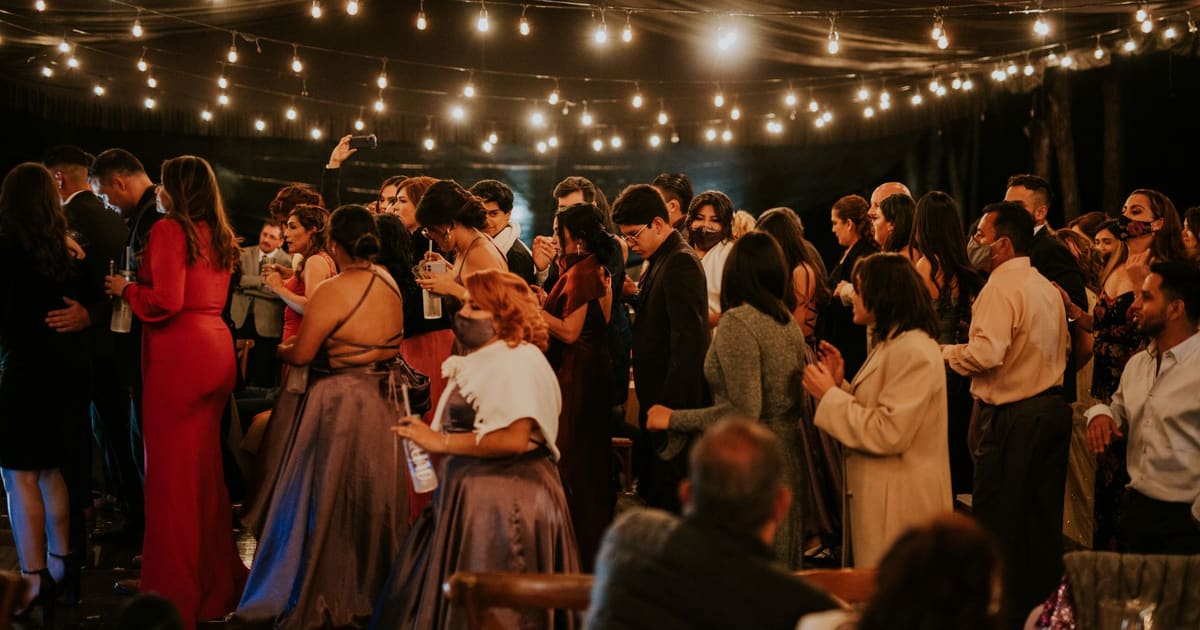
Destination weddings cost less per guest than traditional weddings but more overall -- once you factor in what they actually require. Couples who choose a destination format typically spend $15,000 to $35,000 for a small group in Mexico or the Caribbean, according to industry estimates from The Knot Real Weddings Study and destination wedding planning specialists. That range assumes 20 to 40 guests, an all-inclusive resort package, and basic photography and florals. It does not include guest travel, which each guest covers independently.
What does the average destination wedding cost?
The total cost of a destination wedding varies more than almost any other wedding format because it depends on three interacting variables: location, guest count, and how much of the planning you do through a resort package versus independently.
| Format | Guest Count | Typical All-In Cost (Couple's Share) |
|---|---|---|
| Beach elopement (Mexico or Caribbean) | 2 to 5 | $3,000 - $8,000 |
| Intimate resort package | 10 to 30 | $12,000 - $28,000 |
| Mid-size destination event | 30 to 60 | $25,000 - $50,000 |
| Full-scale destination wedding (Europe) | 40 to 80 | $45,000 - $100,000+ |
The most commonly chosen format -- the intimate all-inclusive resort package in Mexico or the Caribbean -- falls in the $12,000 to $28,000 range for the couple's direct costs. At that guest count, the per-guest cost to the couple is often lower than a local wedding at similar quality, because you are feeding and entertaining fewer people.
What drives the variation: resort tier, location, photographer travel fees, florals, and whether you buy into an all-inclusive package or piece together independent vendors.
What are the most popular destination wedding locations and what do they cost?
Location determines the baseline cost more than almost any other factor. Resort pricing, vendor availability, legal requirements, and travel accessibility all shift significantly by destination.
Mexico (Cancun, Los Cabos, Riviera Maya): The most accessible option for US couples. All-inclusive resorts bundle ceremony space, basic florals, catering, and an on-site coordinator into wedding packages starting around $3,000 to $10,000, with the rest going toward room nights and upgrades. The full couple's cost for 20 to 30 guests runs $12,000 to $28,000.
Caribbean (Dominican Republic, Jamaica, St. Lucia, Bahamas): Similar resort structure to Mexico with slightly higher baseline room rates at premium properties. Expect $15,000 to $35,000 for 20 to 30 guests at a mid-to-upper tier resort.
Hawaii: Technically domestic, which simplifies legal requirements, but premium pricing for venues, food, and accommodation pushes costs to $18,000 to $40,000 for a similar guest count. A major advantage: no passport or foreign marriage license required.
Southern Europe (Italy, France, Greece, Portugal): Where costs escalate most sharply. Villa rentals, local vendor coordination challenges, and high-season pricing combine to push a 30-guest event toward $30,000 to $70,000 and up. Europe is where destination wedding cost most closely approaches or exceeds a traditional local wedding at scale.
How does a destination wedding budget differ from a local wedding budget?
A destination wedding at the same guest count as a local wedding shifts costs in both directions -- lower in some areas, higher in others. The net comparison depends on location and how you structure the event.
Costs that typically decrease at a destination:
- Total guest count: Destination format naturally limits attendance. Fewer guests mean lower catering, linen, and seating costs.
- Decor and florals: Resort venues often have built-in beauty (ocean backdrop, tropical landscaping) that reduces how much decor you need to add.
- Rentals: All-inclusive properties often include ceremony chairs, tables, and basic linens.
Costs that increase at a destination:
- Vendor travel fees: Photographers, videographers, and hair and makeup artists traveling internationally add $1,000 to $3,000 or more in travel costs on top of their base rate.
- Your travel and accommodation: As the couple, you are likely staying multiple nights and covering your own travel.
- Guest room blocks: While guests pay for their own rooms, negotiating a group block requires a room minimum guarantee -- if rooms go unfilled, you may pay the difference.
- Legal complexity: If you are legally marrying abroad, you need translated documents, a local officiant qualified to perform legal marriages, and potentially a notary. Add $500 to $1,500 for legal documentation support.
For context on how destination costs compare to a traditional local event by state, see Average Wedding Cost by State (2026).
Tip
Ask your resort wedding coordinator for the all-inclusive package price per room night in addition to the wedding package fee. At many all-inclusive properties, the wedding package fee drops substantially or disappears entirely once you book a minimum number of guest room nights. If your guests are staying at the resort, you may effectively get the ceremony space at no additional charge.
Who pays for what at a destination wedding?
The cost responsibility split is one of the most frequently confusing aspects of destination wedding planning, because the rules differ from a traditional wedding.
| Cost Category | Who Typically Pays |
|---|---|
| Wedding package (ceremony, florals, cake) | Couple |
| Photographer and videographer fees | Couple |
| Photographer and videographer travel | Couple |
| Guest flights | Each guest independently |
| Guest accommodation | Each guest (often negotiated group rate) |
| Shuttle from hotel to ceremony (if different property) | Couple |
| Welcome dinner or welcome bag | Couple (optional but common) |
| Group excursions | Couple if hosted; guests if optional |
The welcome dinner is worth budgeting if your guests are arriving 1 to 2 days before the wedding. It creates a gathering point and reduces the "I flew all this way and barely saw you" complaint. A casual group dinner for 25 guests runs $800 to $2,500 at most resort restaurants.
What are the legal requirements for getting married abroad?
The legal complexity of a foreign marriage depends entirely on the country. Some destinations -- Mexico in particular -- have streamlined the process for international couples. Others have waiting periods, residency requirements, or document translation rules that make on-site legal marriage more complicated.
At a minimum, most countries require:
- Passport copies for both partners
- Birth certificates (often apostille-certified)
- Proof of single status (divorce decree if previously married)
- A local officiant authorized to perform legal marriages under that country's law
Processing time ranges from a few days in Mexico to several weeks in some European countries. If you are considering legally marrying at the destination, contact the country's consulate or a local wedding coordinator at least 6 months out.
The alternative that many couples choose: a civil ceremony at home the week before or after the destination event handles the legal side quietly, and the destination ceremony is the celebration that everyone attends.
For planning a timeline that incorporates all of this, see Wedding Planning Checklist: Month-by-Month Timeline.
Is a destination wedding cheaper or more expensive than a local wedding?
The honest answer is that it depends on what you are comparing.
A destination wedding for 25 guests in Mexico costs less than a local wedding for 150 guests in a major US metro. That is an obvious comparison -- the guest count does most of the work.
A destination wedding for 25 guests in Mexico costs roughly the same as a local wedding for 25 guests in the same metro area, once you account for the photographer's travel fees and your own accommodation. The resort package often includes venue, catering, and basic decor, which offsets some of the travel premium.
A destination wedding for 40 guests in Tuscany will typically cost more than the same event at home -- sometimes significantly more.
The comparison that matters is your specific guest count, your specific destination, and your specific vendor list. Ask for itemized quotes before concluding that one format is more economical than the other.
Warning
Travel insurance and wedding insurance are not optional for a destination wedding. Weather cancellations, flight disruptions, passport problems, vendor failures abroad, and local regulatory changes can all derail a destination event in ways that have no recovery path without coverage. See Is Wedding Insurance Worth It? for a breakdown of what each policy type covers and when it applies to destination events.
What most couples miss when budgeting a destination wedding
The line items that most frequently cause destination wedding budgets to run over:
- Photographer travel: Many couples budget the photographer's base rate but not their flights, hotel, and meals. International travel for one photographer can add $1,200 to $2,500.
- Welcome bag materials and shipping: Welcome bags for 20 to 30 guests with snacks, sunscreen, and local items cost $20 to $50 per bag -- and shipping them internationally or assembling them locally requires logistics most couples underestimate.
- Gratuity for resort staff: All-inclusive properties include gratuity in the room rate, but dedicated wedding staff -- the coordinator, the butler assigned to the wedding party, the catering captain -- often expect an additional tip envelope.
- Return-home reception: If you plan to host anything at home for the guests who could not travel, budget it separately. Even a casual backyard party for 80 people adds $3,000 to $7,000.
- Currency exchange and bank fees: Paying vendors in a foreign currency at a bad exchange rate or with a credit card that charges foreign transaction fees can quietly add 3 to 5 percent to your costs.
For the elopement or micro-wedding comparison if you are considering going even smaller, see Micro Wedding vs. Elopement: Real Cost Comparison.
Key takeaway
A destination wedding for 20 to 30 guests in Mexico or the Caribbean typically costs the couple $15,000 to $30,000 -- less than a traditional 150-guest local wedding but not dramatically less than a well-planned local event at the same guest count. The financial case depends on your location, guest count, and whether the all-inclusive package structure genuinely replaces the costs it appears to replace. Build an itemized budget before concluding that destination is cheaper.
Frequently asked questions
Are guests expected to pay their own travel for a destination wedding?
Yes, the general etiquette is that guests pay for their own flights and accommodations at a destination wedding. Because you are asking people to spend significantly more to attend, the guest list is expected to be smaller and more deliberate than a traditional wedding. Couples often negotiate a group room block at a lower rate to reduce the burden, and some contribute toward a shuttle from the hotel to the ceremony site.
Does a destination wedding require a legal ceremony abroad?
Not necessarily. Many couples complete the legal paperwork in their home state -- a quiet civil ceremony at the courthouse -- and treat the destination event as the symbolic ceremony and celebration. This eliminates the need to navigate foreign marriage law, language barriers, document translation, and potential validity questions when returning home. Ask your officiant and a family law attorney about your state's specific requirements.
What is a reasonable destination wedding budget?
For 20 to 30 guests at a Mexico or Caribbean all-inclusive resort, a realistic budget is $15,000 to $30,000 including all vendor fees but excluding guest travel. For Europe, the same guest count typically runs $25,000 to $50,000. Beach elopements with only the couple and an officiant can come in under $5,000 including travel, photography, and permits.
Can you have a destination wedding reception back home afterward?
Yes, and this is increasingly common. Couples hold a smaller ceremony at the destination with close family and friends, then host a larger celebration reception back home for extended family, coworkers, and friends who could not travel. The at-home reception can be as casual as a backyard party or as formal as a separate sit-down event. Budget it separately -- venues and catering for 80 to 150 guests add $8,000 to $20,000.
What time of year is cheapest for a Mexico destination wedding?
Mexico's low season runs roughly May through October, overlapping with the rainy season. Resorts offer significantly lower room rates and package prices during these months -- sometimes 30 to 50 percent less than peak winter rates. Hurricane risk peaks July through October, particularly for the Yucatan peninsula. Travel insurance that covers weather cancellations is strongly recommended if you book in that window.
Who pays for the officiant at a destination wedding?
The couple pays for the officiant, which at a destination wedding often includes travel, accommodation, and sometimes meals in addition to the ceremony fee. If you use a resort's in-house officiant or coordinator, the fee may be bundled into the wedding package. An independent officiant traveling internationally typically adds $500 to $1,500 in travel costs on top of their ceremony fee.
Is a destination wedding rude to guests who cannot afford to travel?
It depends on who you invite and how you communicate. Destination weddings work best with a small list of guests for whom the trip is genuinely feasible. Inviting people who cannot realistically travel without offering an alternative is where hurt feelings most often arise. Being direct and empathetic early prevents most friction.